

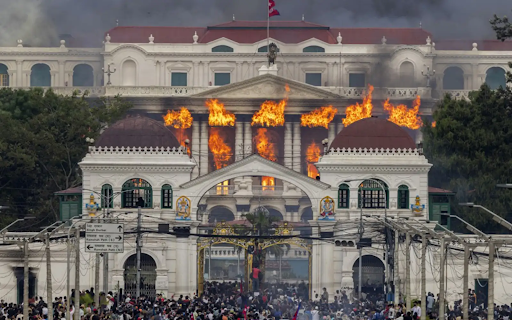
According to local news editor Prateek Pradhan, “People are very angry and Nepal finds itself in a very precarious situation.” His words capture the tense and volatile atmosphere in the Himalayan nation, where deadly protests have forced the prime minister to resign and exposed a deep well of public rage that threatens to consume the political establishment.
The anger, which had been building for years over corruption and nepotism, finally boiled over when the government banned popular social media sites. This move was seen as a blatant attempt to silence the very platforms that citizens, especially young people, were using to hold the powerful accountable. Viral videos exposing the wealth of politicians’ families had struck a nerve, and the ban was interpreted as a desperate move to stop the truth from spreading.
The government’s decision to meet these protests with deadly force, killing 19 people, was a catastrophic error. It confirmed the public’s perception of an oppressive and uncaring state, turning demonstrations into a full-blown uprising. The violence has not intimidated the protesters; instead, it has fueled their determination to see through their demands for fundamental change.
Even with the prime minister’s resignation and the lifting of the ban, the country’s future is far from certain. The protesters’ calls for the government to be dissolved signal that the crisis is ongoing. With public trust in the political system shattered and anger at a fever pitch, Nepal is navigating a treacherous path with no clear outcome in sight.