

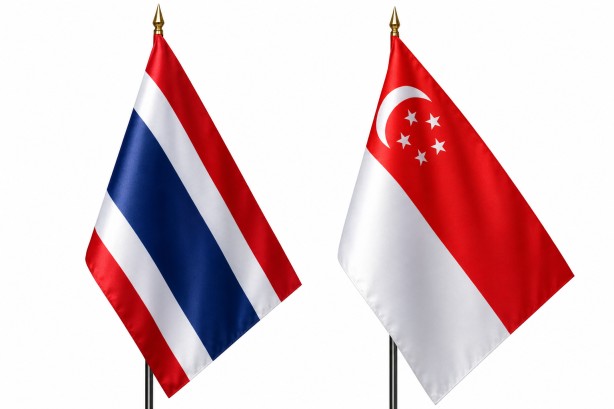
Singapore and Thailand have committed to enhancing their bilateral and regional collaboration as they prepare to assume the ASEAN chairmanship in successive years, with Singapore set for 2027 and Thailand for 2028. This strategic decision emerged during the fifth Singapore-Thailand Leaders’ Retreat in Bangkok on September 2, marking the first meeting between Singapore Prime Minister Lawrence Wong and Thai Prime Minister Anutin Charnvirakul. The leaders underscored the strength of their bilateral relations and committed to formulating a multi-year agenda to ensure continuity across their ASEAN leadership tenures.
A key focus of their discussions was the expansion of cooperation in vital areas such as artificial intelligence, the digital and green economies, energy resilience, food security, and connectivity. Further emphasis was placed on defence, security, and efforts to combat transnational crime. Both leaders reiterated their support for a rules-based international order and emphasized the importance of deeper ASEAN regional integration, signaling a robust partnership aimed at addressing both current and future challenges.
Energy collaboration took center stage in their dialogue, with both leaders endorsing initiatives like the ASEAN Power Grid and the Laos-Thailand-Malaysia-Singapore Power Integration Project. This project is particularly significant as it facilitates Singapore’s importation of renewable hydropower from Laos via Thailand and Malaysia, showcasing a collective effort towards sustainable energy solutions in the region.
During the retreat, a memorandum of understanding on social sector development was signed, covering the exchange of knowledge and research on social welfare policies. This agreement also highlights cooperation between relevant institutions, further cementing the comprehensive nature of Singapore-Thailand relations.
Economic ties between the two nations remain robust, with bilateral trade reaching approximately US$52.4 billion in 2025. Singapore has consistently been Thailand’s largest source of foreign direct investment for three consecutive years, underscoring the enduring economic partnership and mutual benefits that both countries continue to enjoy.