

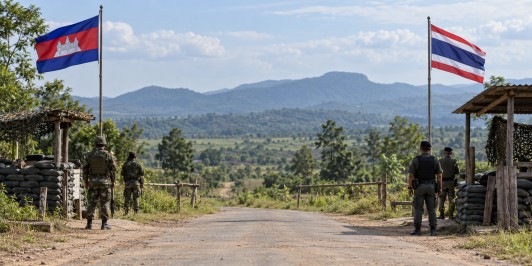
As tensions continue to simmer between Cambodia and Thailand, the practical implications of their ceasefire agreement have come under scrutiny. The accord, which was established in December, was intended to stabilize the region by maintaining military positions and ensuring the safe return of over 20,000 displaced civilians. However, Cambodia asserts that the ceasefire cannot be interpreted as a means to define a new international border or determine the ownership of contested areas.
Cambodian Information Minister Neth Pheaktra emphasized that the ceasefire agreement, effective since December 27, is not to be used to make any permanent decisions about the border. He expressed concerns that Thai military activities, such as the installation of barbed wire, construction of roads, and building of military facilities, might alter the status quo rather than merely preserving existing positions. Such actions, according to Cambodia, could complicate future border negotiations.
Thailand, meanwhile, has been proactive in showcasing its stance on the border issue to the international community. It has organized visits for foreign delegates, ASEAN observers, and journalists to key areas near the border, including the O’Smach casino area and the Choam crossing. Here, Thailand presented claims involving the use of casino buildings and alleged cross-border criminal activities, further contesting Cambodia’s territorial assertions.
While Cambodia disputes Thailand’s control over these contested areas, the focus remains on the humanitarian aspect of the ceasefire. Pheaktra underlined the importance of the safe return of displaced civilians as a critical measure of the ceasefire’s success. The displacement, a direct result of the conflict, underscores the urgent need for a peaceful resolution that respects the rights and safety of those affected.
The border dispute, characterized by both countries’ differing interpretations of the ceasefire’s implications, remains a delicate issue. As both sides navigate the challenges of maintaining peace while asserting territorial claims, the international community watches closely, hoping for a resolution that prioritizes stability and the welfare of displaced populations.