

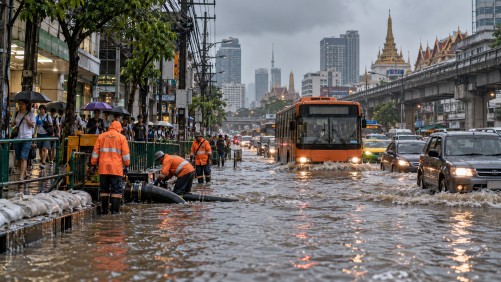
Severe flooding in Bangkok has raised questions about the Thai government’s disaster response capabilities, as residents and experts voice concerns over preparedness and the effectiveness of warning systems. Since September 24, heavy rains have inundated several parts of the city, including Lat Krabang and Bang Kapi, leaving roads, homes, and vehicles submerged. In response, authorities have declared all 50 districts of the capital as disaster-affected areas.
The timing and adequacy of emergency warnings have been a focal point of criticism. Residents in some flooded areas have questioned whether they had enough time to safeguard their belongings and relocate vehicles before the waters rose. To address the ongoing crisis, the government has mobilized military personnel and deployed emergency vehicles, coordinating assistance across road, rail, water, and air services. Efforts to drain and pump water out of affected areas are ongoing as authorities work to manage the crisis.
This natural disaster occurs against a backdrop of declining political support for Prime Minister Anutin Charnvirakul and the Bhumjaithai Party. A recent NIDA Poll, conducted between September 18 and 23—just before the most severe flooding began—showed a drop in the Prime Minister’s favorability, with only 13.76% of respondents naming him as their preferred choice, down from 21.68% in the previous quarter. Similarly, support for the Bhumjaithai Party fell to 12.08% from 17%.
While the poll does not capture public opinion on the government’s flood response, any shifts in sentiment will likely be reflected in future surveys. For now, the focus remains on immediate relief efforts, public warnings, drainage management, and community support in the wake of the flooding that has gripped Bangkok. As the city grapples with these challenges, the effectiveness of government actions will continue to be closely monitored by the public and experts alike.