

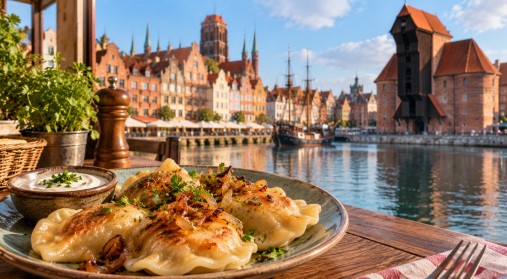
Gdańsk, a city rich with history and atmosphere in Poland, presents an excellent backdrop for indulging in one of the country’s beloved comfort foods: pierogi. These traditional dumplings, renowned for their versatility, come with a variety of fillings ranging from classic potato and cheese to cabbage and mushroom, and minced meat. Modern culinary establishments in Gdańsk have also embraced more inventive fillings, enhancing the traditional dish with a contemporary twist.
For those seeking an authentic taste, pierogi that are initially boiled and then lightly fried are recommended. This cooking method results in a dumpling with a soft interior and a subtly crispy exterior. Typically served with accompaniments like sour cream, fried bacon, or other simple garnishes, these toppings add a layer of richness and texture to the dish. The potato-and-cheese pierogi, in particular, offers a satisfying experience, especially when paired with these savory toppings.
Gdańsk’s culinary scene showcases the adaptability of pierogi, featuring menus that include meat, seafood, vegetables, and even unexpected ingredients. Several establishments in the city pride themselves on crafting these dumplings by hand, allowing visitors to witness the traditional preparation process firsthand. Some restaurants focus almost entirely on pierogi, offering an impressive selection of variations that include boiled, baked, or fried options.
The city is not limited to conventional recipes; contemporary chefs have ventured into creative territory by experimenting with unique fillings like beef, cheese, vegetables, and sweet ingredients. This blend of Polish tradition with modern creativity solidifies Gdańsk as an intriguing destination for culinary enthusiasts. For visitors eager to explore the full spectrum of flavors and cooking styles, sampling a variety of smaller servings rather than a single large portion is an effective approach.
Ultimately, Gdańsk demonstrates that pierogi are more than just a simple national dish. They represent a significant element of Poland’s culinary heritage, continuously evolving while maintaining deep roots in tradition. This fusion of history and innovation makes the city a captivating place for those interested in the evolution of Polish cuisine.