

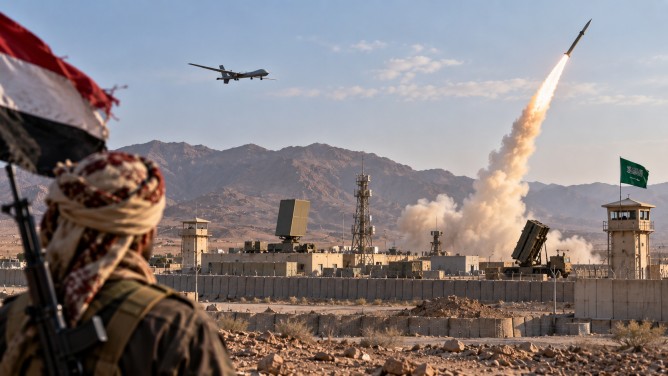
A significant escalation in the conflict between Houthi fighters and Yemeni government forces has been marked by a missile and drone attack on a military installation in southern Saudi Arabia. The Iran-aligned Houthi military spokesperson, Yahya Saree, stated that the assault targeted weapons storage and command-and-control facilities at the Sharurah base. The attack resulted in a projectile landing near the Yemeni border, causing injuries to two individuals and inflicting damage on a mosque and several other structures, according to Saudi civil defense reports.
In response, Yemeni government forces have intensified their military efforts, conducting three airstrikes in the Taiz area and targeting Houthi positions near the strategic Red Sea port city of Mocha. This surge in hostilities comes on the heels of a week-long offensive by the Houthis, during which they seized control of substantial stretches of Yemen’s Red Sea coast and several key islands. These gains have bolstered the Houthis’ strategic hold near the Bab al-Mandab Strait, a crucial maritime passageway at the Red Sea’s southern entrance.
The Houthis have further escalated tensions by declaring a maritime blockade of Saudi Red Sea ports, raising alarms over potential disruptions to regional shipping and energy supplies. Given the increasing importance of this waterway for Saudi oil exports, especially amid ongoing disturbances in the Strait of Hormuz, the implications for global energy markets are significant.
The conflict, which sees Saudi Arabia backing Yemen’s internationally recognized government against the Iran-supported Houthis, continues to strain regional stability. The renewed violence has precipitated a severe humanitarian crisis, with tens of thousands of civilians fleeing their homes amidst the intensified fighting. The United Nations has noted a marked rise in displacement since July, with recent clashes reportedly resulting in over 500 deaths. The ongoing violence poses a grave threat to exacerbating Yemen’s already dire humanitarian situation and further destabilizing the broader Red Sea region.