

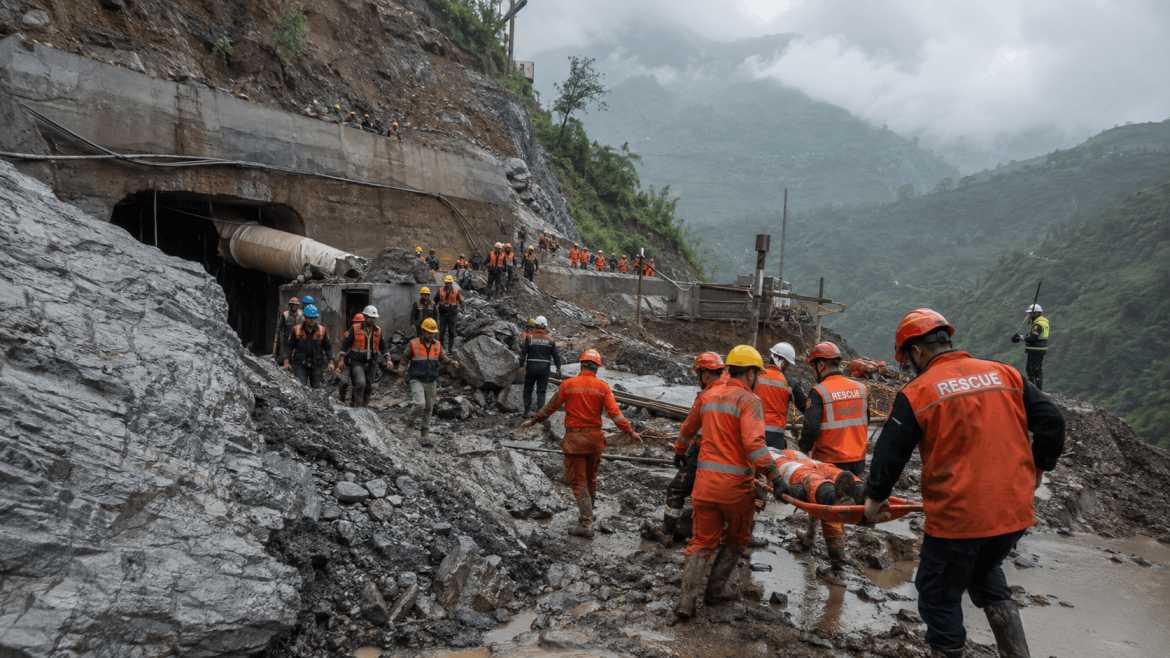
Efforts to rescue over 900 hydropower workers trapped in underground tunnels in Nepal are intensifying after devastating flash floods struck the region last week. The disaster has claimed nearly 940 lives in Nepal, with additional fatalities reported in Tibet. Thousands more remain missing in both regions. The workers, about 500 of whom are believed trapped, are located in the heavily impacted Rasuwa and Nuwakot districts. As rescue operations proceed, experts caution that decreasing oxygen levels in the tunnels are diminishing the chances of survival for those trapped inside. Survivors who escaped the flooding have recounted how many colleagues were left behind as the waters surged.
Rescue operations face significant challenges due to destroyed infrastructure, unpredictable river flooding, and challenging terrain, which necessitates heavy reliance on helicopters. Neighboring countries are dispatching temporary bridge equipment to help restore access to the affected areas. The massive debris blocking the tunnels has complicated efforts to reach the workers, prompting the use of blasting operations in some locations. The floods have also severely impacted Nepal’s power generation capacity.
Rescue workers have described the dire conditions within the tunnels, where mud has risen to chest height in some areas, and visibility is severely restricted. Despite these obstacles, there is cautious optimism that some workers might have reached safe zones within the tunnel systems, potentially allowing them to survive despite the harsh conditions. The broader disaster has affected tens of thousands of people, obliterating entire communities and sparking concerns about the impact of climate change on glacial and mountainous regions. Nepal’s government has labeled the flooding an unprecedented natural disaster, prompting a massive response involving tens of thousands of security personnel and volunteers.
International aid has been swift, with specialized rescue teams, funding, and technical assistance arriving from neighboring countries, underscoring the magnitude of the crisis. Amidst the devastation, rescuers found a glimmer of hope when they successfully pulled a young child alive from the mud, a moment of relief amidst the ongoing tragedy. Additionally, concerns have been raised about the exchange of glacier and water-level data between neighboring nations, with some officials worried that gaps in data sharing could impede future disaster preparedness efforts in the region.