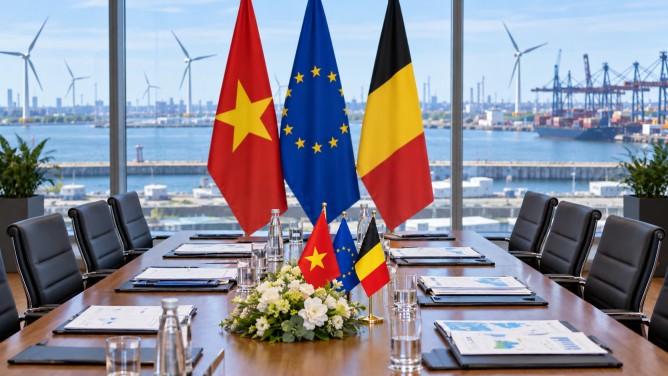
Vietnam is set to deepen its strategic cooperation with the European Union (EU) and Belgium in areas such as trade, technology, and green energy. This development follows a series of high-level meetings held in Brussels from October 21 to 24, where Vietnamese Communist Party General Secretary and President To Lam led discussions with European leaders. The talks underscored Vietnam’s commitment to an independent and diverse foreign policy while aiming to expand cooperation in several critical sectors.
During meetings with European Council President Antonio Costa and European Commission President Ursula von der Leyen, Vietnam and the EU pledged to enhance their Comprehensive Strategic Partnership. They focused on translating existing agreements into actionable outcomes, particularly in sustainable infrastructure, digital transformation, maritime security, and climate change. The EU highlighted its Global Gateway initiative as a potential vehicle for high-quality investments and sustainable connectivity projects in Vietnam.
Economic collaboration remained a central theme, with Vietnam urging more effective implementation of the EU-Vietnam Free Trade Agreement and progress on the EU-Vietnam Investment Protection Agreement. Addressing the European Commission’s yellow card on Vietnamese seafood exports was also a priority. The EU expressed its readiness to support Vietnam’s ambitions to become a regional transport and transit hub, with projects like the Bac Ai hydropower project and Lien Chieu Port in Da Nang discussed as focal points of cooperation.
In bilateral talks with Belgium, the focus was on renewable energy, semiconductors, biotechnology, and environmentally friendly industries. Belgium’s ratification of the EU-Vietnam Investment Protection Agreement was noted as a pivotal step towards enhancing investment confidence. Logistics and maritime transport featured prominently in discussions, with an agreement anticipated between Vietnam Maritime Corporation and the Port of Antwerp-Bruges to bolster cooperation in this sector.
The meetings also underscored the importance of research, education, and innovation in supporting long-term economic development. Vietnam encouraged its overseas experts and intellectuals in Europe to strengthen collaborations between universities, research institutions, and technology companies, aiming to contribute to Vietnam’s development.
Overall, these engagements reflect Vietnam’s broader strategy to diversify international partnerships, attract investment, and secure a stronger position in global supply chains. The strengthened ties with the EU and Belgium are expected to foster sustainable growth, technological advancement, and enhanced economic connectivity between Southeast Asia and Europe.