

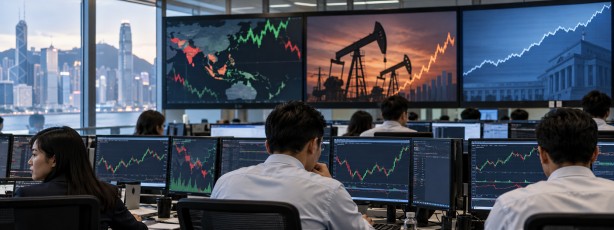
Asian markets displayed a mixed performance on Friday as investors grappled with rising oil prices, increasing government bond yields, and ongoing geopolitical tensions in the Middle East. The market sentiment was further complicated by uncertainties in US-China trade relations, despite an extension of their trade truce.
Oil prices saw a slight decline during Friday’s trading session, with Brent crude falling around 0.7% after a significant gain of more than 3% the previous day. This fluctuation adds to existing concerns about energy supplies and inflation as tensions in the Middle East continue to exert pressure on the oil market.
The focus on government bond yields remains pronounced, with the US 10-year Treasury yield reaching its highest level since 2007 and the 30-year yield climbing to a peak not seen since 2004. Similarly, Japan’s 10-year government bond yield hit a fresh 30-year high, underscoring the global impact of rising yields on investor strategies.
In response to these economic pressures, Japan’s Nikkei 225 index saw a gain of 1.2%, while Hong Kong’s Hang Seng Index dropped by 1.8%. Other major markets in the region, including those in Shanghai, Seoul, and Taipei, were closed for holidays.
Adding to the complexities faced by investors, the trade dynamics between the United States and China remain unsettled. While the two nations agreed to extend their trade truce by two months, key issues such as tariffs, agricultural purchases, rare-earth supplies, and technology restrictions remain unresolved, keeping investors cautious.
Overall, the combination of fluctuating oil prices, record-high bond yields, and the backdrop of international trade and geopolitical tensions is challenging market stability in Asia, with potential ramifications for global inflation and economic growth.