

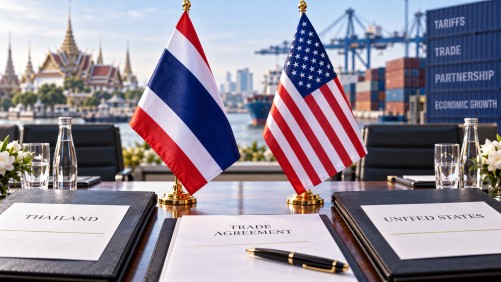
Thailand is moving quickly to negotiate a reciprocal trade agreement with the United States, aiming to safeguard its exporters from the threat of increased tariffs. This proactive step comes as Thai officials work to ensure their international trade competitiveness, particularly against regional rivals like Malaysia and Indonesia.
The proposed Agreement on Reciprocal Trade (ART) is intended to provide Thai exporters with improved market access and more certainty. As these negotiations progress, Thai Prime Minister Anutin Charnvirakul is expected to engage in discussions with U.S. President Donald Trump to address tariffs and related trade issues. Currently, Thai exports are subject to a 12.5% tariff under a U.S. Section 301 measure, which targets products linked to forced labor concerns.
Further complicating matters for Thailand is an ongoing U.S. investigation into structural excess production capacity that began in March 2026. This probe could potentially lead to additional tariffs on Thai goods. Thai officials are countering these claims by providing data that disputes U.S. estimates of production capacity in key industries, arguing for a reassessment.
Thailand’s goal in these negotiations is to secure tariff treatment similar to that received by its regional competitors, thereby leveling the playing field for its exporters. However, the final terms of the ART are still under negotiation, and any agreement reached will require approval through Thailand’s domestic processes before implementation.
In addition to addressing tariff issues, the agreement aims to tackle U.S. concerns about trade barriers, investment opportunities, and access to the Thai market. By resolving these issues, Thailand hopes to foster a more favorable trading environment with one of its key economic partners.